+86-400-1866-598 cs@chinasteelmarket.com +86-18864881658 (Whatsapp&Wechat)
Login | Register
Empowering small and medium-scale steel purchasing
Quickly obtain FOB/CIF price
Home > Articles > Mechanical Properties

Mechanical Properties Articles

Short News
07/08 17:18
< On August 7, the price of cold-rolled steel plate in Foshan rose slightly. SPCC (ASTM A1008 CS) Liugang 1.2*1500*3000mm, 566.12, up 2.96. (USD/ton)
07/08 17:17
< On August 7, the price of weathering steel plate in Tangshan rose slightly. Q355NHB (ASTM A588) HBIS 8 (coil, hot rolled) 643.19, down 8.89. (USD/ton)
Read More
07/08 17:11
< On August 7, the price of boiler steel plate in Rizhao remained stable. Q345R (ASTM A516 Grade 70) 30mm Rigang 607.62. (USD/ton)
07/08 17:06
< On August 7, the price of cold rolled ribbed steel rebar in Tianjin fell slightly. CRB600H (ASTM A615 Grade 80) Qiaojian Φ10 (coil) 546.86, down 8.89. (USD/ton)
Read More
07/08 17:05
< On August 7, the price of welded steel pipe in Tianjin remained stable. Q235 (ASTM A36 Gr.D) Youfa DN200 (8"*6.0mm) 517.22. (USD/ton)
07/08 17:02
< On August 7, the price of I-beams in Tangshan did not fluctuate significantly. Q235B (ASTM A36) Jinxi 28# (280×122×8.5) 499.43, up 2.96. (USD/ton)
Read More

Answers

  • An analysis of Euro-standard vs. Chinese-standard H-beams

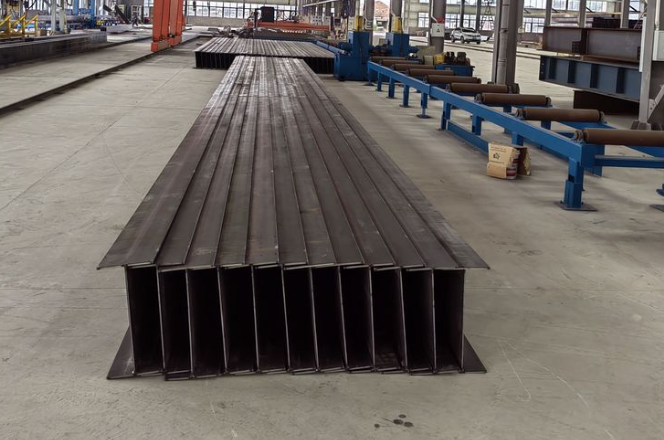
    Euro-standard (EN) H-beams offer a wider variety of dimensions and specifications; their section heights and widths can be adjusted to meet specific project requirements. Their cross-sectional shapes are generally more flexible and can be customized according to specific design needs.

    Chinese-standard (GB/T) H-beams have relatively fixed dimensions and specifications, offering a more limited range of choices. Common designations include 10#, 12#, 14#, and 16#, each corresponding to specific cross-sectional dimensions and shapes. Their cross-sectional shapes are generally uniform, lacking flexibility.

    EN H-beams are typically manufactured from high-quality alloy steel, offering superior strength and toughness. GB/T H-beams are primarily made from ordinary carbon steel, resulting in relatively lower strength and toughness. These materials differ in terms of mechanical properties and chemical composition.

    EN H-beams made of S235JR steel correspond to the GB/T Q235B;
    EN H-beams made of S355J0 steel correspond to the GB/T Q355C;
    EN H-beams made of S355J2 steel correspond to the GB/T Q355D;
    EN H-beams made of S355JR steel correspond to the GB/T Q355B.


  • Should I ask the supplier to provide a material certificate along with the shipment when purchasing steel?

    Yes, when purchasing steel, the supplier should provide a material certificate along with the goods. This is both a regulatory requirement and standard practice in the steel trade. The material certificate serves as the steel's "ID card," recording key information such as the batch number, heat number, chemical composition, and mechanical properties; it is the essential document verifying that the steel meets quality standards, contractual terms, and national specifications.
    Procurement contracts should explicitly require the supplier to provide the original manufacturer's material certificate bearing an official company seal. Upon receipt of the goods, it is crucial to verify that the heat and batch numbers on the certificate match those on the physical tags attached to the steel, and to ensure that the seal and data on the certificate are complete and legible. If you have any doubts regarding the authenticity of the material certificate, you may also request third-party testing to verify the goods.


  • What accounts for the price differences when purchasing anti-corrosion processed steel pipes?

    Raw material costs form the foundation of the price. Fluctuations in the market price of steel directly impact costs. Additionally, the quality and price of anti-corrosion coatings (such as polyethylene or epoxy powder) play a crucial role.
    Different anti-corrosion methods vary vastly in terms of materials, processing complexity, and protective performance.
    Furthermore, the steel pipe's diameter and wall thickness directly affect the surface area requiring treatment and the amount of material consumed. Generally, larger diameters and thicker walls increase processing difficulty and costs, resulting in a higher price.
    When requesting quotes from suppliers, be sure to ask for a detailed breakdown specifying the anti-corrosion process, coating thickness, and applicable standards; this allows for an accurate comparison of price differences. Exercise caution if a quote is significantly lower than prevailing market rates.


    Price discrepancies are common in the procurement of anti-corrosion steel pipes. This is mainly because the final price is affected by multiple factors, including the type of anti-corrosion treatment, the base pipe itself, specifications, procurement volume, and market transportation.
    The cost of basic seamless pipe and welded pipe substrates is relatively transparent, with limited price differences. The main fluctuation range comes from the materials used for anti-corrosion coatings and the construction process. Even for the same type of corrosion protection, different grades can have vastly different prices.
    For example, the price difference between ordinary and reinforced 3PE anti-corrosion coatings (thicker polyethylene layer, stricter requirements) can be more than double. The cost of anti-corrosion coating processing varies depending on the process and materials. Standard anti-corrosion construction includes multiple processes such as pipe pretreatment, rust removal, primer, and topcoat. Reputable manufacturers strictly follow the standards for rust removal, ensuring that the coating thickness meets the requirements and the anti-corrosion service life meets the design life.
    Some factories simplify the rust removal process by directly applying anti-corrosion materials. However, the coating has insufficient adhesion, and after only a few years of underground use, the coating peels off, and the pipes quickly rust and leak. Although the purchase price is lower, the pipes are repaired and replaced in advance, which significantly increases the long-term maintenance cost.
    When requesting quotations, specify all parameters, including the base pipe material, pipe diameter and wall thickness, type and thickness of the anti-corrosion coating, and applicable standards, to ensure that quotations from different suppliers are based on the same standard.


Timely Info Independent Platform Multiple guarantees Self-operated storage

China Steel Market

Empowering small and medium-scale steel purchasing


How can I help you?